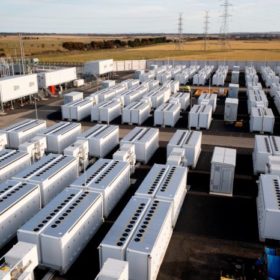
Victorian Big Battery drives major revenue jump for Neoen
The 300MW/450MWh Victorian big battery has proven a financial winner for French renewable power producer Neoen which has reported its first-quarter revenue has jumped by more than one third.
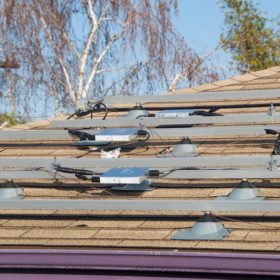
Enphase predicts another revenue landmark this quarter
Enphase expects the volume of business generated to rise again for the April-June period, accompanied by another bump in battery shipments.
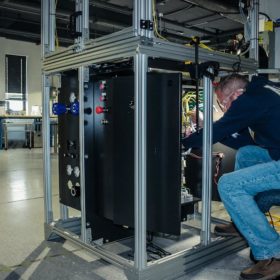
US startup claims hydrogen output for $1.2/kg or less via new water vapour electrolyser
Advanced Ionics has developed an electrolyser that runs at temperatures below 650 C. It is reportedly able to produce hydrogen for US$0.85/kg (AU$1.2/kg) or less. CEO Chad Mason recently spoke with pv magazine to provide a closer look at the water vapour electrolysis tech.

Elon Musk wins SolarCity lawsuit, avoids $2.8 billion judgment
Business magnate Elon Musk has avoided what would have been the largest judgment in US history on an individual executive.
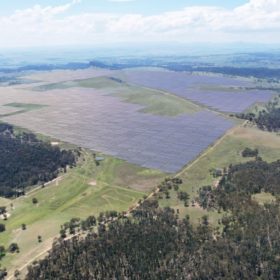
Maoneng reveals plans for 950MW solar-battery project
Australian energy developer Maoneng has unveiled ambitious plans to build an almost 1GW solar PV farm and battery energy storage facility in regional New South Wales.

Energy Vault signs deal with India for gravity-based energy storage
Switzerland’s Energy Vault will support Indian state-run power producer NTPC by deploying its gravity-based energy storage technology and software solutions.
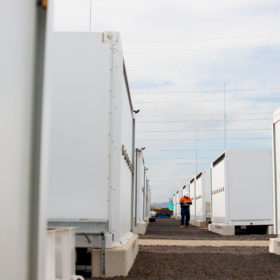
Weekend read: Back to the future with BESS
Bearing witness during battery energy storage system manufacturing can reveal potential failure points and is crucial given the industry’s relative immaturity, argues Frédéric Dross, the vice-president of strategic development for quality assurance provider STS. And much can be learned from the early days of solar.

MIT, NREL researchers develop 40%-efficient thermophotovoltaic cell for grid-scale thermal batteries
The device is described as a heat engine with no moving parts that is able to produce power from a heat source of between 1,900 to 2,400 C. This concept is known as thermal energy grid storage (TEGS) and consists of a low-cost, grid-scale storage technology that uses thermophotovoltaic cells to convert heat to electricity above 2,000 C.
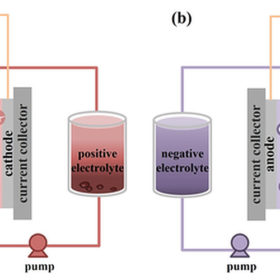
Bromine-based flow batteries for renewables storage
Bromine-based flow batteries have the potential for high energy density in renewable energy storage. Their commercial adoption, however, remains challenging due to the cathode materials used for their construction. New research from China seeks to shed light on how to overcome these hurdles.
Solar panel glut causing messy ‘false economy’
Global solar supply chain issues and the Chinese energy crisis which hit in the second half of last year have, ironically, led to a “massive” oversupply of solar panels in Australia, according to major distributors. The tension between increased global panel costs and the glut of them within Australia has led to some messy pricing and strange market dynamics on the ground.