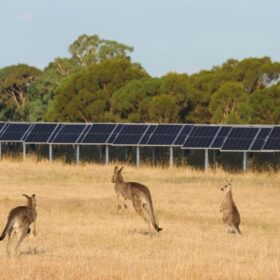
European Energy achieves first in Australian market
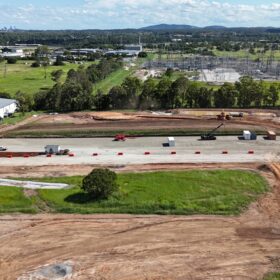
Denmark-based European Energy, which has more than 5 GW of renewable energy capacity under development in Australia, has completed its first PV project in the country with the commissioning of the 58 MW Mokoan Solar Farm in Victoria.
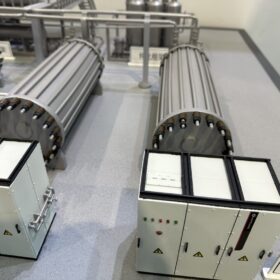
GO time for guarantee of origin scheme consultation
Draft rules for a new voluntary certificate scheme that will authenticate renewable energy-generated electricity and low-emission products including hydrogen and green metals are now open for public consultation.
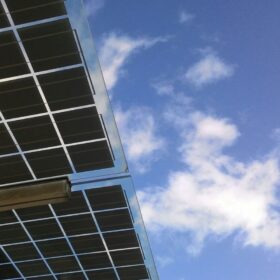
PNG opens tender for solar-plus-storage minigrid
The United Nations Office for Projects Services has kicked off a tender for the development and construction of a solar and battery storage minigrid in Papua New Guinea. The deadline for applications is March 24, 2025.
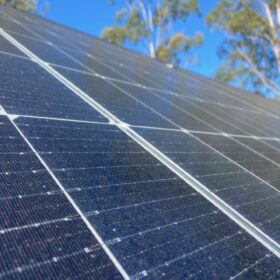
EPBC clears path for 320 MW solar and battery project
The way is clear for developer TotalEnergies is commence construction of a 320 MW solar and battery energy storage project in the New England region of New South Wales after the federal environment regulator ruled the project didn’t require its approval.
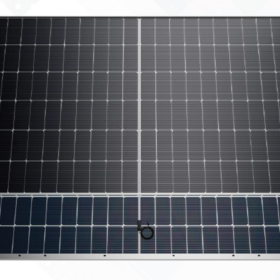
Jolywood releases 595 W bifacial TOPCon solar panel for harsh environments
The Chinese manufacturer said that its new glass-backsheet Windproof module utilises a zinc-aluminum-magnesium surface alloy technology and a high-strength steel substrate. It features a power conversion efficiency of up to 23.03%.
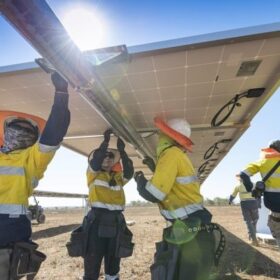
Government revels in record renewable investment and declining emissions
New data released by the federal government and Clean Energy Regulator indicate a record delivery of renewable energy investment and declining emissions in Australia.
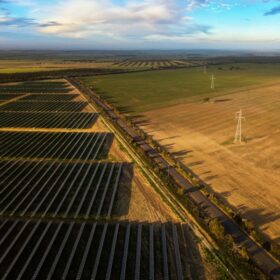
Feedback sought on hybrid projects in next CIS tender for Western Australia
On the cusp of Capacity Investment Scheme Tender 2 – WEM Dispatchable successful proponent announcements, the federal government now calls for feedback on how to approach hybrid projects in the pending 2025 WEM Tender for Western Australia, opening mid-2025.
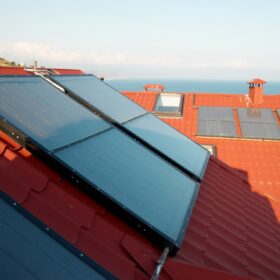
CEC research finds preference for rooftop solar far outshines nuclear
Clean Energy Council research has found 80% of respondents to an Australian-wide survey support rooftop solar and 69% favour solar farms over 35% showing preference for nuclear power generation.
Acen pushes ahead with 400 MWh New England battery build
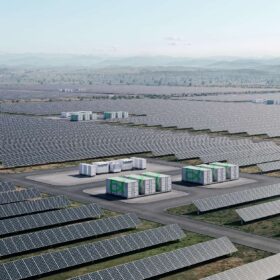
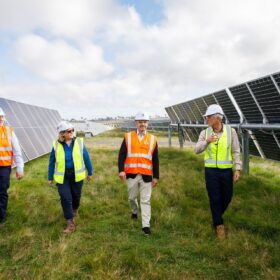
Construction proper has started on a 200 MW / 400 MWh battery energy storage system being built alongside renewables developer Acen Australia’s 720 MW New England Solar project in northern New South Wales.
Passive solar module cooling tech linked to improved project efficiency
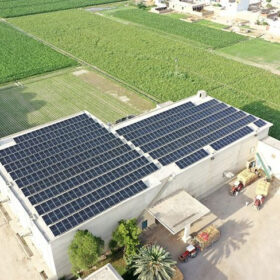
As solar deployment accelerates in markets where high ambient temperatures are the norm, researchers across the globe continue to experiment with new approaches to cooling PV modules. A cost-efficient solution could have a significant impact on project efficiency and panel lifespans.