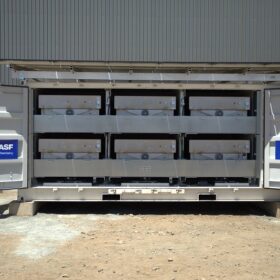
CleanCo pilots 1.5 MW sodium sulphur battery at Swanbank Clean Energy Hub
Queensland electricity generator CleanCo is piloting Australia’s largest grid-connected sodium sulphur battery at the Swanbank Clean Energy Hub project, 45 kilometres southwest of Brisbane.

UNSW researchers cook up recipe for better, more sustainable batteries
Researchers at the University of New South Wales have developed a battery component using food-based acids found in sherbet and winemaking, that could make lithium-ion batteries more efficient, affordable and sustainable.
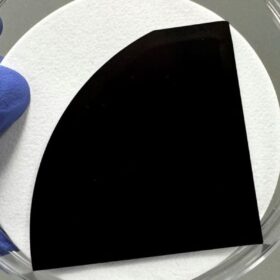
Longi, ANU develop gettering-based process to improve n-type wafer quality
The Chinese module maker and the Australian National University utilised phosphorus diffusion gettering and another defect mitigation strategy to improve the quality of n-type wafers. The proposed process contributed to improve the material quality especially towards the tail-ends.

$50 million funding to boost clean energy supply chain
The Australian government will in November open applications for a $50 million funding program that is to support the development of more diverse solar PV, hydrogen electrolyser and battery supply chains in the Indo-Pacific region.
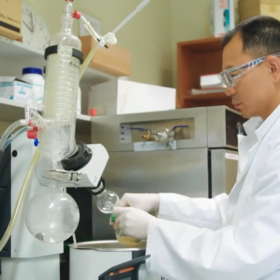
Aqueous zinc-ion battery research advances biodegradable storage solution
South Australia Flinders University researchers, in collaboration with Griffith University, have published findings into aqueous zinc-ion batteries studies, as a more sustainable energy storage technology alternative to lithium-ion batteries.
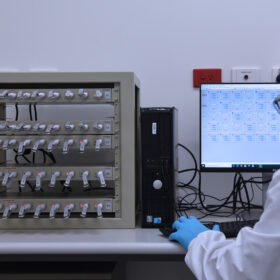
UQ tech captures PFAS chemicals for re-use in batteries
Researchers at the University of Queensland have developed technology to remove harmful synthetic fluorine-based chemicals from water in order to re-purpose them for use in batteries.
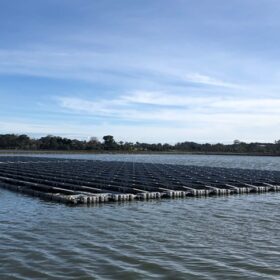
Optimising bifacial solar panels for floating PV applications in tropical freshwater
New research from India shows how bifacial solar modules should be deployed to achieve strong performance in floating PV projects planned on tropical freshwater. Their experimental setup demonstrated that higher efficiency gains are achievable by gauging panel height, water depth, and tilt angle.
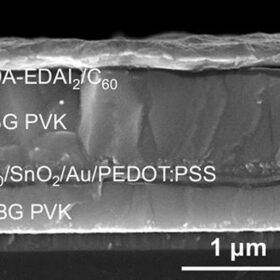
All-perovskite tandem solar cell based on tin-lead perovskite achieves 28.8% efficiency
Conceived by Chinese scientists, the cell was built with new surface reconstruction strategy based on the use of 1,4-butanediamine (BDA) and ethylenediammonium diiodide (EDAI2) as surface modifiers. The device was able to retain 79.7% of its initial efficiency after 550 h.
Nanoparticles, phase-change materials in PVT systems
A team of scientists has used paraffin wax integrated with aluminum oxide and zinc oxide to improve the electrical and thermal performance of a photovoltaic-thermal system. They have also developed a prediction model for this specific combination of hybrid nano-phase change materials.

Research sheds new light on shade effects for rooftop PV
Researchers have covered part of a rooftop solar plant with varying numbers of shading cloth layers and continued to measure the power, current, and voltage of the system. They have been able to identify a point after which the value of system current and maximum power is no longer sensitive to shading heaviness.