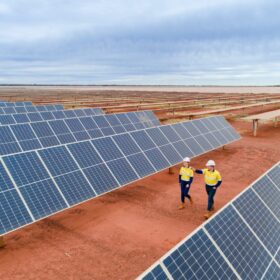
Commissioning process spoils improvements in solar project timelines
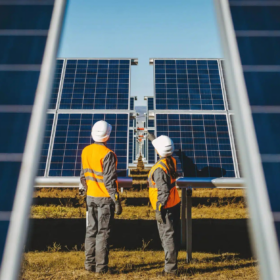
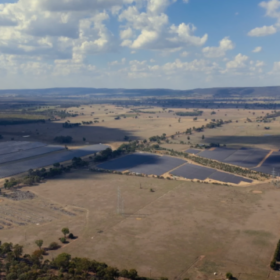
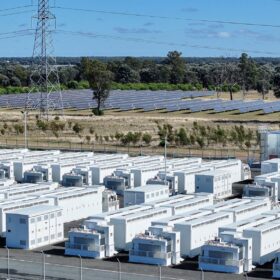
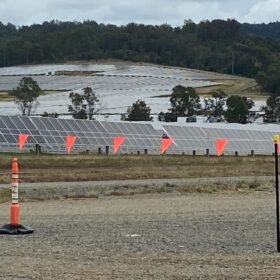
Australia’s energy transition risks falling behind with a new report showing that the time required to plan, build and commission a large-scale solar farm is almost four years with the final stage of the process having blown out to six months or more.
New anti-reflective coating for silicon solar cells
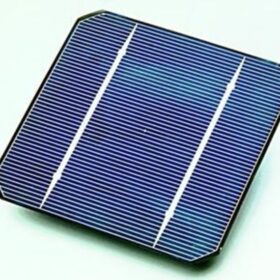
Developed by an international research group, the novel anti-reflective coating is based on silicon dioxide and zirconium dioxide. It reportedly minimises a solar cell’s reflection loss, while enhancing its light absorption properties.
Pacific delivers first hydrogen stand-alone power system for NT
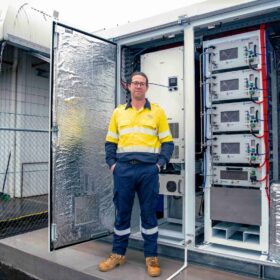
Renewables company Pacific Energy has deployed a first-of-a-kind containerised hydrogen electrolyser and fuel cell as part of a technology development project that is exploring the feasibility of using hydrogen as a clean energy source and storage solution for the Northern Territory’s grids.
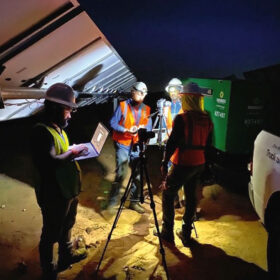
Weekend read: Cracking cell defect detection
After years of improving quality standards, solar cell cracking appears to be on the rise again, perhaps due to new manufacturers entering the sector. Clean Energy Associates’ (CEA) senior engineering manager Claire Kearns-McCoy considers ways to stop the rot.
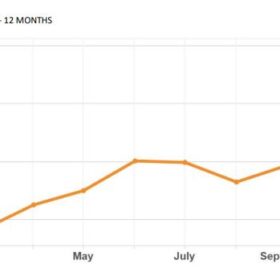
Consumers say bigger is better for rooftop solar but on a budget
Solar panel and system prices are on the decline but figures provided by energy industry analyst SunWiz show that an increasing number of Australian households are opting to forgo savings in search of increased generation capacity.
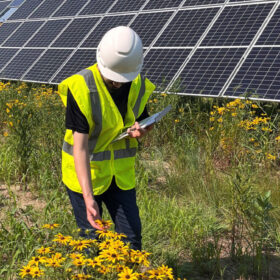
Solar sites linked to higher levels of insects
Scientists conducting a five-year research project in the United States have observed a tripling of insect numbers near two solar facilities built on rehabilitated agricultural land. They say the findings show how habitat-friendly solar could help protect insect populations and improve pollination in nearby agricultural fields.
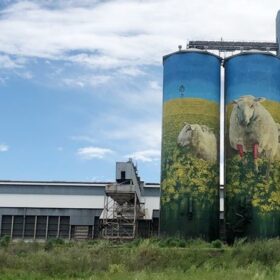
Ausgrid turns to microgrid technology to support energy system into future
New South Wales electricity distributor Ausgrid is exploring the potential of solar-powered microgrids to enhance energy security for communities during extreme weather events and extended outages with construction having started on what will be the company’s first microgrid.
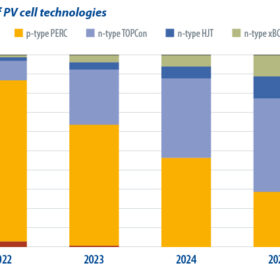
Weekend read: The writing’s on the wall for p-type
The shift from positively doped, “p-type” to negatively doped, “n-type” solar technology has sparked manufacturing expansion, says S&P Global’s Jessica Jin.
New solid state battery charges in minutes, lasts for thousands of cycles
A team of researchers in the United States have developed a new lithium metal battery that can be charged and discharged at least 6,000 times — more than any other pouch battery cell — and can be recharged in a matter of minutes.
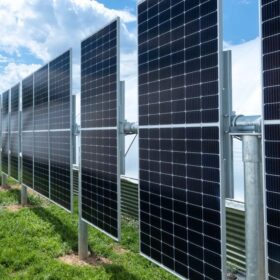
Solar fence stands out in Gridcog simulation
Solar fences are beginning to gain traction in European and North American markets and now data provided by energy software service provider Gridcog suggests that vertical bifacial solar could be technically and economically viable in Australia.