Renshine Solar hits 27.5% efficiency for flexible all-perovskite solar cell
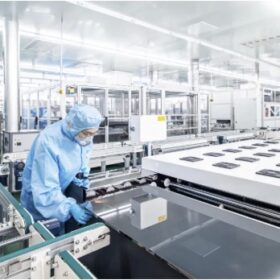
Renshine Solar says it has achieved a record 27.5% efficiency for a flexible all-perovskite cell and 23.0% on a 20.26 cm² panel.
Premier Energies launches 620 W TOPCon solar module
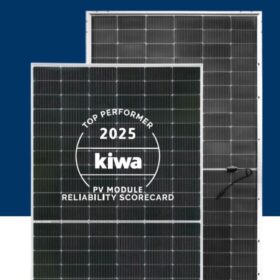
Premier Energies has started commercial output at its 1.2 GW n-type G12R solar cell line in India and introduced a 620 W bifacial module with n-type tunnel oxide passivated contact cells based on the rectangular G12R wafer format.
Novel MPPT technique for EV charging combined with PV, fuel cells
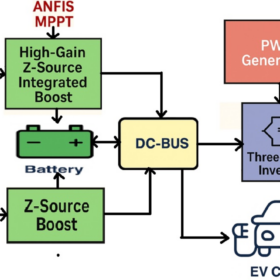
Scientists from India have designed a novel electric vehicle system with a reported efficiency of 98.7%, using PV panels, a proton-exchange membrane fuel cell, battery storage and supercapacitor, with hopes to expand the concept to renewable-energy-based DC microgrids with vehicle-to-grid (V2G) capability.
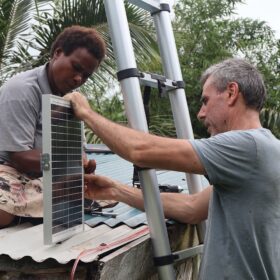
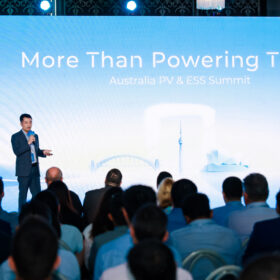
Can the Asia-Pacific region deliver clean, affordable energy by 2030?
The future of the global energy landscape will be shaped by Asia and the Pacific. Over the past two decades, our region has been the principal driver of global energy demand and emissions. Energy has powered prosperity, lifted millions out of poverty and transformed societies.
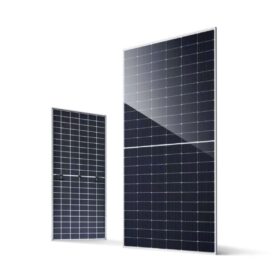
JA Solar unveils 650 W TOPCon module for desert PV projects
JA Solar has launched DesertBlue, a 650 W tunnel-oxide passivated contact module for desert PV projects, featuring self-cleaning glass, reinforced frames, and heat-tolerant design with desert-specific certification.
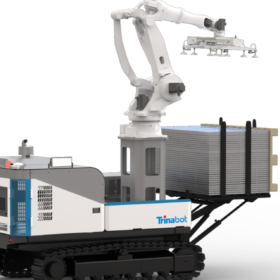
Trinabot offers installation robots for large PV projects
The China-based technology and solar infrastructure company has launched Buildex, a line of solar panel installation robots. A built-in forklift, a robotic arm and advanced automation software support its ability to carry, pick and place panels in a variety of terrains.
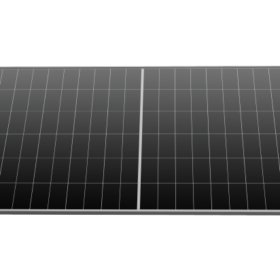
Longi unveils lightweight module for low-load rooftops
Chinese PV manufacturer Longi has launched a lightweight back-contact solar module for low-load commercial and industrial rooftops with limited structural load capacity.
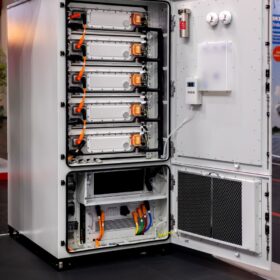
GoodWe launches 125 kW/261 kWh all-in-one C&I battery
GoodWe has introduced a 125 kW / 261 kWh all-in-one battery for commercial and industrial use in China, with applications spanning factories, farms, EV charging stations, commercial sites, and grid or off-grid systems.

Malaysian partners to develop 1.5 GW of solar
Subsidiaries of Gentari and Gamuda will develop 1.5 GW of solar with battery storage in Malaysia to supply hyperscale data centres under the Corporate Renewable Energy Supply Scheme, supporting the country’s push to expand clean energy and meet rising tech-sector demand.

Waaree introduces flexible lightweight solar modules
Waaree Energies has launched flexible solar modules up to 70% lighter and under 3.5 mm thick. The panels can be bonded directly to surfaces without mounting penetrations, suitable for sites where drilling or heavy support structures are impractical.