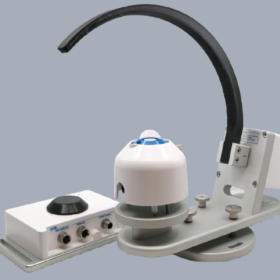
EKO unveils new solar monitoring solution
The latest irradiance sensor solution from Japan-based EKO Instruments provides continuous measurements in the field. Well-suited for bifacial PV systems, it supports the measurement of global horizontal irradiance, diffuse horizontal irradiance and direct normal irradiance, even in reflective and cloudy conditions.
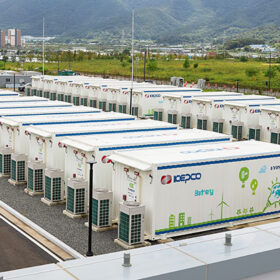
South Korea’s biggest battery comes online
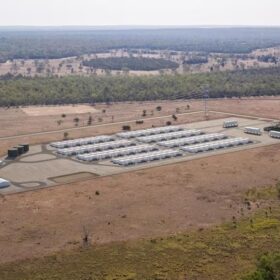
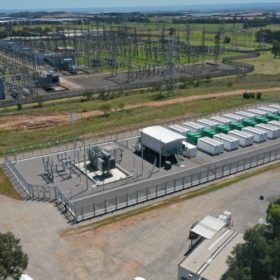
Korean utility KEPCO has completed a 978 MW battery project that is billed as Asia’s largest battery energy storage system for grid stabilisation purposes.

Hinen unveils all-in-one home energy storage solution
Chinese manufacturer Hinen has launched an integrated battery energy storage system with power options ranging from 3.6 kW to 25 kW for on- and off-grid residential applications.
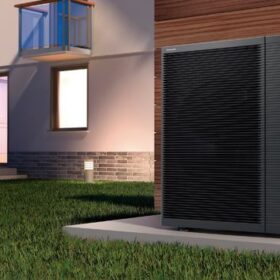
Panasonic testing smart thermostats in residential heat pumps
Panasonic will integrate new smart thermostats and an energy management software in its Aquarea system from November. The new solutions are also designed to enable PV system owners to manage their heat pumps based on local weather forecasts.
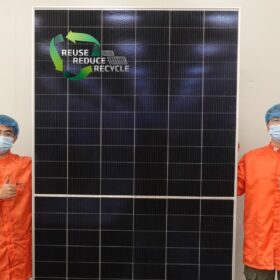
Trina Solar presents ‘fully recyclable’ 645 W PV module
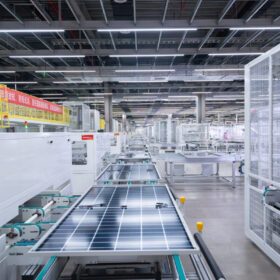
Trina Solar claims it has developed the world’s first “fully recyclable” 645 W PV module with 20.7% efficiency. It made the panel with interlayer separation reagents, chemical etching technology, and wet chemical silver extraction tech.
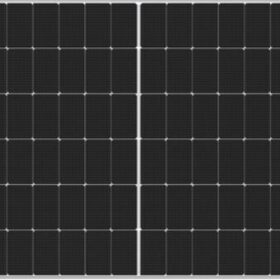
Sharp unveils 610 W TOPCon solar panel with 22.58% efficiency
Sharp’s new IEC61215- and IEC61730-certified solar panels have an operating temperature coefficient of -0.29% per C and a bifaciality factor of over 80%.
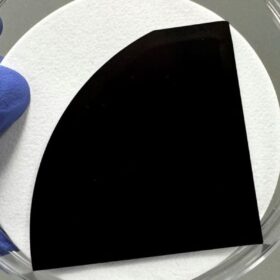
Longi, ANU develop gettering-based process to improve n-type wafer quality
The Chinese module maker and the Australian National University utilised phosphorus diffusion gettering and another defect mitigation strategy to improve the quality of n-type wafers. The proposed process contributed to improve the material quality especially towards the tail-ends.

$50 million funding to boost clean energy supply chain
The Australian government will in November open applications for a $50 million funding program that is to support the development of more diverse solar PV, hydrogen electrolyser and battery supply chains in the Indo-Pacific region.
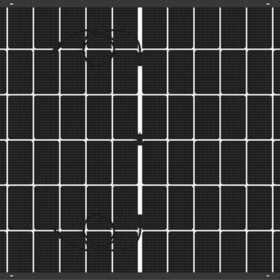
Sharp unveils 450 W bifacial TOPCon module with 22.52% efficiency
Sharp’s new IEC61215- and IEC61730-certified solar panels have an operating temperature coefficient of -0.29% per C and a bifaciality factor of more than 80%.

Envertech launches microinverters for PV systems with up to 60 modules
Envertech says it has developed microinverters for PV systems supporting up to 60 modules, allowing up to four modules per unit with separate maximum power point tracking.